When My World Flipped Upside down, Pt.5
Part five.
Part 5: The Betting House and the Breaking Point
Simon wasn’t about to wait six months for a doctor who didn't care about the why. By late January, we found ourselves in the office of a second neurologist. He was a breath of fresh air—phenomenal, patient, and he actually listened.
I looked him in the eye and said, "Look, it’s one of two things: either I have partial focal frontal lobe seizures, or I’m crazy and these are psychological."
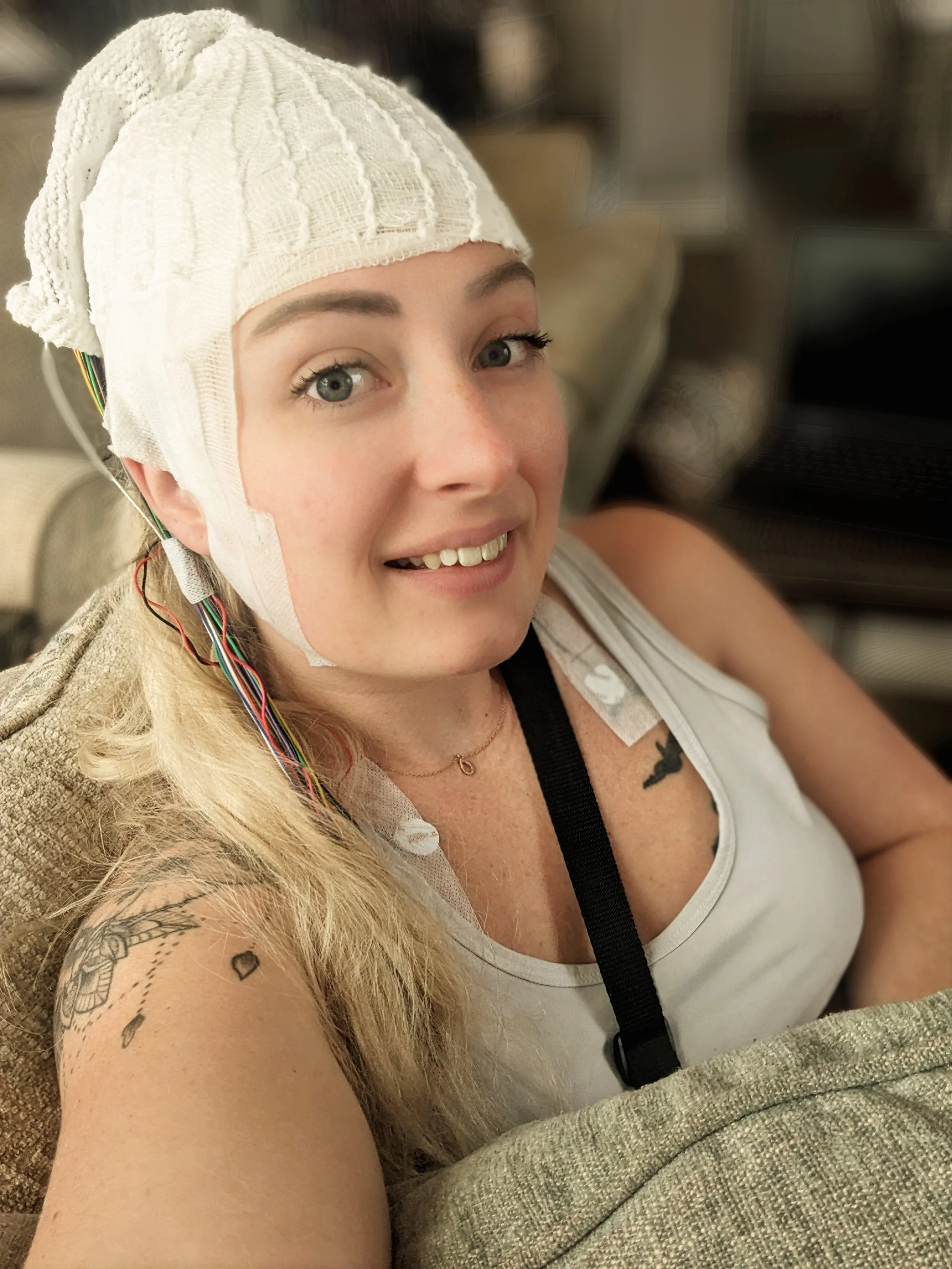
He didn't blink. He told me he’d "bet his house" it was the frontal lobe. But, to be 100% sure, he ordered an at-home video EEG. I jumped at it. I needed the data. I needed to know I wasn't making this up.
The Shell and the Savior
While we waited for the test, the world around us was crumbling. In Part 1, I mentioned our marriage was on the rocks, and this experience could have easily demolished us. I found out later that Simon would get calls at work saying I’d had another seizure, and he would lock himself in a quiet office to cry because he couldn't fix me. He saw the shell I was becoming and feared it was permanent.
To make matters worse, the day I was admitted to the hospital after Costa Rica, Simon’s side of the family had unexpectedly turned upside down. There was everything working against us that could have broken us. But you know what? He was there holding me up, and I was there trying to shield him with everything I had. We were out of "fight," and man, together we were strong.
The Five-Day Couch Lock
The EEG tech arrived in early February and glued several monitors to my scalp. These suckers pick up everything. On the monitor, I could see a spike for every eye blink or every time I lifted a piece of paper. With a camera on me 24/7, I essentially lived on the couch for five days.
During those five days, I had several seizures. As upsetting as it was, I was relieved. We’re capturing them. Help is coming.
But the seizures were escalating. I already had the nausea, the sweating, the coldness, thirst, the drooping eye, convulsions with eyes rolled into my head, and the heavy head. Even biting my tongue was normal. But now, new symptoms were joining the party. Now I was humming during and afterwards, I was hit with a stutter that stuck around for a while. I was slower to remember how to do things, and every once in a while, I’d basically forget how to swallow food or drinks and start choking. It was pure ridiculousness.
The Message in the Portal
Five days after the EEG was complete, I woke up to a short message in the patient portal from the neurologist:
"You are not crazy, but this is not epilepsy. It is PNES (Psychogenic Non-Epileptic Seizures). My suggestion is EMDR or Brainspotting with a therapist."
I was devastated. I felt like a failure. I sat there thinking, How do I tell Simon? 'Hey hubby, I know your mom has gone a bit crazy, but surprise! Your wife is nuts too!'
But Simon? He wasn't sad. He was relieved.
He spent weeks whispering in my ear, reminding me that my brain wasn't being damaged. "Now we know," he’d say. "Now we can FIX it." That was the goal. He was right, and with every whisper, I started to believe him a little more.
But every time someone asked what we found out, I felt like I died a little more as we explained they were "non-epileptic"—meaning pent-up trauma was supposedly causing them. Everyone would smile and say, "How good!" while I wanted to disappear.
I looked for answers online, but nothing made sense. I joined Facebook "support groups," but they were infuriating. People seemed okay with living like this. There was no talk of hope. The search for a new therapist was underway, and my podcast was the only escape I had—ironically having conversations about life while mine felt like it was at a standstill.
This was rock bottom. But they say the sun always comes back out after a storm. And it was coming. Slowly.
Explained by Neurologist, Dr. Carolyn Taylor
Author - Samantha Mandell, RTT Practitioner